

Table of Contents
- The Real Cost of Professional Grade Gear for Beginners
- Entry-Level vs Professional Sports Gear: What Changes at Each Tier
- When to Upgrade Sports Equipment: A Decision Framework
- Safety Standards in Youth Sports Gear: What Parents Need to Know
- The Psychological Impact of Gear Anxiety on Young Athletes
- Rental vs Purchase: Which Makes Sense for Your Situation?
- Where Professional Grade Gear Delivers Real Value
- Frequently Asked Questions
Last Updated: September 14, 2026
The Real Cost of Professional Grade Gear for Beginners
Ask any travel ball parent whether professional grade gear is worth it for beginners and you will get a different answer from every person in the bleachers. The honest answer is that it depends on the athlete, the position, and how fast they are growing. At Drip & Rip, we talk to families making this decision every season, and the pattern is consistent: most beginners do not need professional grade gear to improve, but a few specific pieces are worth the upgrade because they change how a young athlete plays, not just how they look.

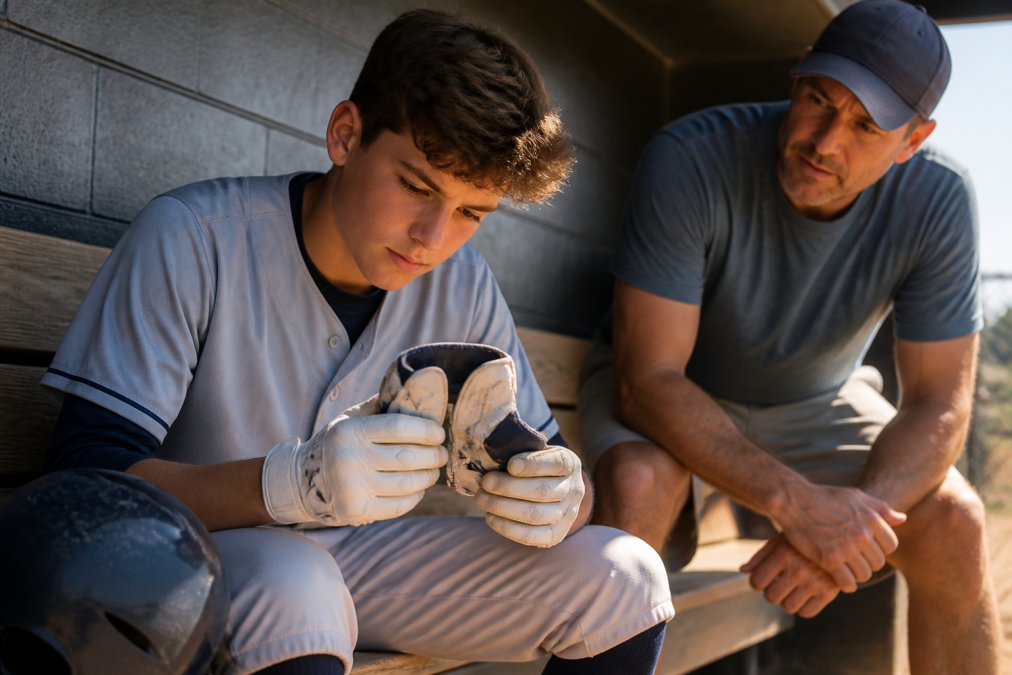
What You're Actually Paying For
The price gap between entry-level and professional grade gear comes down to three things: materials, construction, and consistency. A premium full-grain leather palm, for example, breaks in to the shape of a hitter's hand and holds its grip longer than a synthetic palm (pubmed.ncbi.nlm.nih.gov). Reinforced stitching and multi-layer foam shells cost more to produce, and that cost shows up at checkout.
What most families miss is that they are not paying for a single feature. They are paying for the gear to perform the same way in inning one and inning seven.
The Hidden Costs Nobody Talks About
The sticker price is only part of the equation. Beginners outgrow gear fast, and a fourteen-year-old can add a glove size in a single growth spurt (the CDC). Sizing mistakes, replacement pieces, and the temptation to re-buy after a bad tournament all add up.
A common mistake is buying the most expensive option first, then discovering the fit is wrong. Fit matters more than tier at this age.
Entry-Level vs Professional Sports Gear: What Changes at Each Tier
Entry-level and professional sports gear differ in materials, construction, and consistency, not in whether an athlete can succeed. Beginners improve through reps and coaching far more than through equipment upgrades. The tier matters most when an athlete has already outgrown what their current gear can do.
Materials and Build Quality
Entry-level gear typically uses synthetic leather, single-layer padding, and lighter stitching. It is lighter on the wallet and lighter in the hand, which suits younger athletes still developing grip strength and swing mechanics.
Professional grade gear uses full-grain leather, multi-layer impact foam, and reinforced seams. The Drip & Rip "Baller" Series batting gloves are a good example: a full-grain leather palm and overlay paired with a reinforced long cuff built for hitters who are competing, not just learning.

Performance Features That Actually Matter
Not every premium feature translates to better play at the beginner level. Here is what actually moves the needle for a young athlete:
- Grip consistency: A leather palm that locks in without slipping.
- Impact protection: Multi-layer foam on elbow guards and sliding mitts.
- Fit security: Adjustable straps that stay put through a full game.
- Durability: Gear that survives a full travel ball season.
Features like advanced weather sealing or high-end autofocus performance matter more in other sports. On the diamond, the basics carry the weight.
When to Upgrade Sports Equipment: A Decision Framework
Upgrade sports equipment when the athlete has outgrown the current gear in fit, protection, or durability, not when a teammate shows up with something newer. The harder question is not whether to upgrade but whether to buy at all, for many beginners, renting or borrowing the high-end piece for a specific project or tournament is the smarter first move.
The Upgrade Signal Table
| Signal | What It Looks Like | Recommended Action |
|---|---|---|
| Fit failure | Glove slips, straps loosen, guard shifts | Replace now |
| Protection gap | Bruising through padding on routine plays | Upgrade to multi-layer foam |
| Durability failure | Stitching tears mid-season | Move to reinforced construction |
| Performance plateau | Coach identifies gear limiting mechanics | Consider a targeted upgrade |
| Style only | Wants a new colorway, gear still works | Wait until next season |
Rent, Borrow, or Buy: A Decision Matrix
Renting high-end gear is the most underused option for beginners. It lets an athlete test whether a premium piece actually changes their play before the family commits. Use this matrix to decide:
| Situation | Rent | Buy |
|---|---|---|
| First season, still deciding on the sport | Yes | No |
| One-off tournament or showcase | Yes | No |
| Travel ball, year-round play | No | Yes |
| Rapid growth phase | Maybe | Entry tier only |
| Position-specific safety gear | No | Yes |
| Style-driven upgrades | No | Only if gear still works |
| Testing a premium tier before committing | Yes | After the trial |
Rental makes sense when the need is temporary, the fit is uncertain, or the athlete is still deciding whether they love the game. Purchase makes sense when the athlete plays year-round, has a stable size, and needs gear that fits their hand or body specifically. For protective pieces that touch the body directly, sliding mitts, batting gloves, elbow guards, buying is almost always the better call. Shared gear rarely fits correctly, and fit is what makes protection work.
The Three-Question Test
Before any upgrade, run the athlete through three questions:
- Does the current gear still fit? If yes, the upgrade is probably about style, not performance.
- Is the current gear failing in a way that affects play? Slipping grip, shifting padding, and torn stitching are functional failures. Faded colorways are not.
- Will the athlete still fit this piece next season? If not, buy at the entry or mid tier and save the premium purchase for a piece sized to a hand or joint.
If the answer to all three points toward a real limitation, the upgrade is justified. If any answer points to style or impatience, wait.
Safety Standards in Youth Sports Gear: What Parents Need to Know
Safety standards in youth sports gear exist to set minimum protection thresholds for helmets, face guards, and catcher's equipment. Parents should look for gear that meets the relevant certification for the sport and position, and replace any piece that has taken a hard impact, even if it looks intact. Maintaining this same rigorous attention to mechanical integrity is just as vital when considering whether a bolt-on supercharger kit provides a sensible performance upgrade for an inexperienced driver.
Protective accessories like elbow guards, leg guards, and sliding mitts are not covered by a single federal standard the way helmets are (Recreational Helmets). That means the buyer has to evaluate construction quality directly.
What to check before buying protective gear:
- Multi-layer foam, not a single sheet
- Adjustable straps that hold position during movement
- Coverage over the joint or area being protected
- Stitching that will not pull apart under repeated impact
The Drip & Rip Specter elbow guard uses a multi-layer impact foam shell with an adjustable elastic strap system, which is the kind of construction parents should look for regardless of brand.

The Psychological Impact of Gear Anxiety on Young Athletes
Gear anxiety is real, and it cuts both ways. A young athlete who feels under-equipped can hold back on the field. One who feels over-equipped can also freeze, worried about damaging expensive gear or not living up to the price tag.
The healthier framing is that gear should remove distractions, not add them. When a sliding mitt fits right, the athlete stops thinking about their hand and starts thinking about the steal. That is the point of good equipment.
Rental vs Purchase: Which Makes Sense for Your Situation?
Rental makes sense for one-off trials, seasonal sports, and athletes still deciding whether they love the game. Purchase makes sense when the athlete plays year-round, has a stable size, and needs gear that fits their hand or body specifically.
Use this decision matrix:
| Situation | Rent | Buy |
|---|---|---|
| First season, still deciding | Yes | No |
| Travel ball, year-round play | No | Yes |
| Rapid growth phase | Maybe | Cheap tier only |
| Position-specific safety gear | No | Yes |
| Style-driven upgrades | No | Only if gear still works |
For protective pieces that touch the body directly, like sliding mitts and batting gloves, buying is almost always the better call. Shared gear rarely fits correctly, and fit is what makes protection work.
Where Professional Grade Gear Delivers Real Value
Professional grade gear delivers real value in three places: protection, fit, and durability. If a piece of gear checks all three, the upgrade pays for itself over a season. If it only checks style, it is a want, not a need.
Here is where the upgrade is worth it for beginners:
- Batting gloves: A premium leather palm like the Drip & Rip Baller Series Flags glove holds grip and shape through a full season, while cheaper gloves break down in weeks.
- Sliding mitts: The Drip & Rip Magma sliding mitt uses dual impact plates and a Drip-Lock velcro strap, protecting the lead hand on every steal.
- Elbow and leg guards: Multi-layer foam absorbs pitch impact that single-layer padding cannot.
- Sunglasses: Polarized lenses with UV400 protection cut glare and improve ball tracking, and the Drip & Rip Vibe Series does it for $29.
Where professional grade gear does not deliver value for beginners: bats, bags, and anything the athlete will outgrow before the season ends.
The real question is not whether professional grade gear is worth it in general, but whether it is worth it for your athlete, this season, in this position. If you are ready to upgrade the pieces that actually change how your player performs, Drip & Rip builds premium batting gloves, sliding mitts, elbow guards, leg guards, and sunglasses with the bold colorways and reinforced construction that hold up to a full travel ball schedule. Free shipping applies on orders of $75 and up. Add to cart and gear up for the season.
Frequently Asked Questions
Does expensive gear actually improve performance for beginners?
Not as much as practice does. A beginner with a $200 glove and 10 hours of weekly training will outperform one with a $400 glove and 2 hours. Professional grade gear helps most when you already have solid fundamentals. The exceptions are safety items like sliding mitts and elbow guards, where better build quality directly reduces injury risk. For batting gloves, the jump from basic to premium leather ($59) improves grip and durability, but it won't fix a flawed swing.
At what skill level should an athlete upgrade to professional gear?
Consider upgrading when you're playing travel ball or high school competitively, training 4+ days per week, and your current gear is failing before the season ends. If you're replacing batting gloves every 6-8 weeks, a premium pair like Drip & Rip's Baller Series ($59) with full-grain leather palms will outlast three cheap pairs. The upgrade makes sense when your commitment level justifies the investment, not when your ego does.
What are the primary differences between entry-level and professional-grade equipment?
Entry-level gear uses synthetic materials, basic stitching, and minimal padding. Professional grade uses full-grain leather, reinforced stress points, multi-layer impact foam, and precision construction. For example, a basic elbow guard has a single foam pad, while the Drip & Rip Specter ($45) uses multi-layer impact foam that disperses pitch force. Entry-level gets you on the field. Professional grade keeps you there through a full season.
Does professional gear provide a competitive advantage in youth sports?
It provides a durability advantage more than a performance one. At the youth level, the biggest edge comes from gear that doesn't break down mid-season. A sliding mitt with dual protective plates ($54) protects the lead hand on every steal attempt, which means fewer jammed fingers and more aggressive baserunning. That reliability compounds over a season. The psychological boost of looking sharp and feeling prepared is real too, but it works alongside skill, not instead of it.
Is it better to buy used professional gear or new beginner gear?
For protective equipment like helmets, buy new. For batting gloves and sliding mitts, used professional gear can work if you inspect it carefully. Check for stretched wrist straps, worn palm leather, and cracked protective plates. The used market makes sense for bats and fielding gloves where break-in is a feature. For everything else, new beginner gear from a brand like Drip & Rip at $29-$59 often costs less than used premium gear with unknown wear history.


