

Table of Contents
- What to Look for in Top Rated Batting Gloves for 2026
- How to Choose Batting Gloves for Your Skill Level and Sport
- Batting Glove Sizing Guide: Get the Right Fit
- How to Clean Baseball Batting Gloves (and Keep Colors Bold)
- Hand Fatigue and Vibration Dampening: What the Science Says
- Top Rated Batting Gloves for 2026: What Sets the Best Apart
- Frequently Asked Questions
Last Updated: September 11, 2026
What to Look for in Top Rated Batting Gloves for 2026
The best batting gloves for 2026 balance three things: durable material, reliable grip, and wrist support that actually holds. Get those right and everything else, from colorways to stitching, falls into place. This guide from Drip & Rip breaks down what separates pro-grade gear from gloves that fall apart by midseason.
Batting gloves are protective hand coverings worn by baseball and softball hitters to improve grip on the bat, reduce sting from off-center contact, and prevent blisters during repetitive swings. Most gloves use a leather or synthetic palm paired with a breathable backhand and a hook-and-loop wrist closure.
The three factors below matter more than brand hype or price tag.
Material Quality and Durability
Cabretta leather remains the benchmark for feel, but it wears fastest (peer-reviewed research). Synthetic leather and engineered mesh last longer and cost less, though they sacrifice some tackiness. Look for palm reinforcement at the heel of the hand, the spot that wears through first on most gloves. Stitching integrity at the finger gussets tells you more about durability than any marketing claim.
Grip Technology and Palm Texture
A perforated palm improves breathability but reduces surface contact. A smooth palm maximizes tackiness but traps sweat. The compromise most hitters prefer is a lightly textured palm with perforation zones at the fingers only. Grip enhancement matters most in humid conditions, when a slick bat handle costs you bat control on inside pitches.
Wrist Support and Closure Systems
Wrist stability separates a $30 glove from a $70 one. A hook-and-loop closure that wraps tight without pinching gives you the control to adjust tension mid-at-bat. Elastic cuffs feel comfortable but stretch out over a season. If you have wrist issues or swing a heavy bat, prioritize a closure system with a wide strap and reinforced stitching.
How to Choose Batting Gloves for Your Skill Level and Sport
Match the glove to how often you play, not to what the pros wear. A travel ball player logging four games a weekend needs different durability than a rec-league hitter playing twice a month. This is where most buyers overspend or underspend, and both mistakes cost you.
For younger or newer players, flexibility and fit matter more than premium leather. For competitive athletes, abrasion resistance and palm reinforcement become the deciding factors. The grip profile should match your bat handle, and if you use a tapered or thin handle, a thinner palm gives you better feel.
Youth vs. Adult Sizing and Fit
Youth gloves run smaller in both hand length and finger width. Adult sizing assumes a fully grown hand, so a 14-year-old moving up often needs a small adult rather than a large youth. Measure from the base of your palm to the tip of your middle finger before ordering.
Softball-Specific vs. Baseball-Specific Designs
Softball bats have larger barrels and different grip diameters, so softball-specific gloves often feature a slightly wider palm and a more open finger spread. Baseball gloves tend to run narrower with a tighter finger fit. If your daughter plays softball, a baseball glove will fit, but it won't be optimized for her bat or her swing.
| Factor | Baseball Gloves | Softball Gloves |
|---|---|---|
| Palm width | Narrower | Slightly wider |
| Finger spread | Tighter | More open |
| Best for | Standard bat handles | Larger barrel grips |
| Wrist fit | Snug | Adjustable |
Batting Glove Sizing Guide: Get the Right Fit
The correct batting glove size comes from measuring your dominant hand from the base of the palm (the crease where your wrist meets your palm) to the tip of your middle finger, then matching that length to the manufacturer's chart. Most adult charts run in half-inch increments from about 6.5 inches (small youth) to roughly 9 inches (extra large adult). A glove that's too tight restricts blood flow and causes hand fatigue. One that's too loose slides on the bat and kills your feel.
Measure Twice, Order Once
Use a cloth tape or a strip of paper against a ruler. Measure the dominant hand, the top hand on the bat for most hitters, because that's the hand doing the most gripping and the one that suffers most from a bad fit. Measure at the end of the day when your hands are slightly swollen, not first thing in the morning, so the glove still fits during a late-inning at-bat.
Three fit checks before you commit:
- Make a fist. The glove should not bunch at the palm.
- Grip a bat. You should feel the handle, not a layer of loose leather.
- Flex each finger. No pinching at the base of the fingers.
Hand Shape Matters More Than Length Alone
Two hitters can measure the same palm length and need different sizes. Hand shape splits into roughly four profiles, and most sizing charts ignore all of them:
- Wide palm, short fingers. The length measurement undersells you. Size up for palm room, then accept slightly loose fingertips, or look for a glove with a wider palm cut.
- Narrow palm, long fingers. The opposite problem. A length-matched glove will feel tight across the knuckles. Size up and rely on the wrist strap to take up slack.
- Wide palm, long fingers. Rare and the hardest to fit off the shelf. Prioritize palm width first, then check finger length.
- Narrow palm, short fingers. The easiest fit. Standard charts usually work without adjustment.
If you're between sizes, size up for batting and down for fielding. A batting glove that's a hair loose still lets you grip; a fielding glove that's loose costs you transfer speed.
Youth vs. Adult Sizing and Fit
Youth gloves run smaller in both hand length and finger width. Adult sizing assumes a fully grown hand, so a 14-year-old moving up often needs a small adult rather than a large youth. The tell is finger width, not length, if the fingers feel cramped but the palm length is right, you've outgrown youth sizing even if the chart says otherwise.
Softball-Specific vs. Baseball-Specific Designs
Softball bats have larger barrels and different grip diameters, so softball-specific gloves often feature a slightly wider palm and a more open finger spread. Baseball gloves tend to run narrower with a tighter finger fit. If your daughter plays softball, a baseball glove will fit, but it won't be optimized for her bat or her swing.
| Factor | Baseball Gloves | Softball Gloves |
|---|---|---|
| Palm width | Narrower | Slightly wider |
| Finger spread | Tighter | More open |
| Best for | Standard bat handles | Larger barrel grips |
| Wrist fit | Snug | Adjustable |
How to Clean Baseball Batting Gloves (and Keep Colors Bold)
Cleaning batting gloves correctly extends their life by months and preserves bold colorways that fade with harsh washing. The wrong method, hot water or machine washing, breaks down leather and bleeds dye.
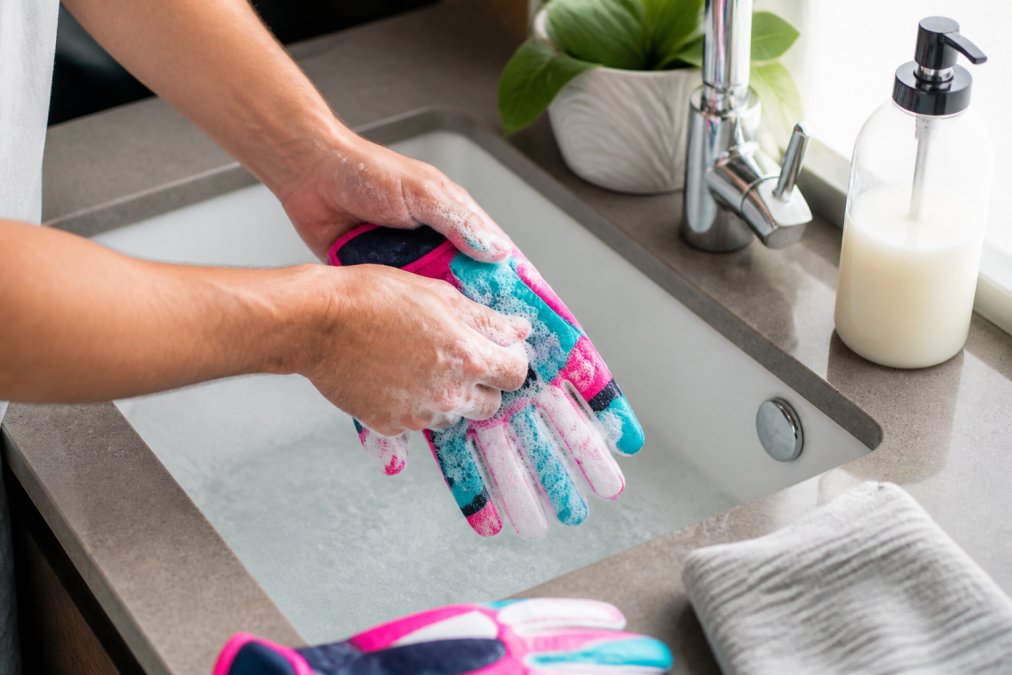
Follow this protocol:
- Brush off dried dirt with a soft-bristle brush.
- Mix a few drops of mild soap in cool water.
- Wipe the palm and fingers with a damp cloth. Do not soak.
- Rinse the cloth and wipe again to remove soap residue.
- Air dry away from direct heat or sunlight. Never use a dryer.
For color retention, wash within a day or two of heavy use and avoid bleach or detergent with optical brighteners. Rotate two pairs if you play multiple games a week, so each pair fully dries between uses.
Hand Fatigue and Vibration Dampening: What the Science Says
Most batting glove guides tell you to buy padding and move on. None explain what's actually happening in your hands on a mishit, which is why buyers keep overpaying for thick foam that doesn't work. Here's the mechanism.
Where Sting Actually Comes From
When a pitch hits the bat away from the sweet spot, the bat vibrates at a higher frequency and larger amplitude than it does on a squared-up contact. Those vibrations travel down the handle into your palms and fingers. The sting you feel is your hand absorbing that energy. Two variables control how much reaches your nerves:
- Frequency. Off-center hits produce higher-frequency vibration, which the body perceives as a sharper sting than the lower-frequency hum of a well-struck ball (PubMed).
- Contact area and pressure. The harder you're gripping and the smaller the contact patch between hand and handle, the more concentrated the energy transfer.
This is why a glove can't eliminate sting, it can only spread the energy over more area and add a thin layer of damping between the handle and your skin.
Why Thin and Dense Beats Thick and Soft
Palm padding thickness directly affects how much vibration reaches your hands, but not in the direction most people assume. A thick, soft foam layer compresses under grip pressure and bottoms out, at which point it transmits vibration almost as efficiently as no padding at all. A thin, dense layer stays in its working range under load and keeps damping. The practical takeaway: look for a palm that feels firm and thin rather than pillowy, and check that padding sits at the palm heel and the base of the fingers, where off-center contact energy concentrates.
Hand Fatigue Is a Grip Problem First
Hand fatigue builds from two sources: grip tension and repetitive impact. Repetitive impact you can only reduce with padding and technique. Grip tension you can fix with fit. A glove that follows the natural curve of a relaxed hand lets you hold the bat with less closing force, and that reduction compounds over a nine-inning game or a four-game weekend.
What most guides miss is that a properly fitted glove reduces fatigue more than padding does. A loose glove forces you to grip harder, and that tension travels up your forearm by the third inning (PubMed). By the seventh, your bat speed is down and your swing path is drifting.
Top Rated Batting Gloves for 2026: What Sets the Best Apart
The top rated batting gloves for 2026 share four traits: a snug fit profile, palm reinforcement at wear points, a hook-and-loop closure that holds tension, and materials that survive a full season. Everything else is preference.
Here's how to score any pair before you buy:
| Feature | What to Check | Why It Matters |
|---|---|---|
| Palm material | Leather or reinforced synthetic | Durability and tackiness |
| Reinforcement | Heel-of-hand patch | Prevents blowout |
| Closure | Wide hook-and-loop strap | Wrist stability |
| Ventilation | Breathable mesh backhand | Moisture-wicking comfort |
| Stitching | Double-stitched gussets | Longevity |
Drip & Rip builds batting gloves, sliding mitts, and elbow guards for baseball, softball, and golf athletes who want performance gear that stands out. The brand's bold colorways and high-performance design target competitive players who refuse to blend in, and free shipping applies on orders $75 and up. If you want gear that holds up through travel ball season and looks sharp doing it, that's the lane Drip & Rip plays in.
For sizing questions, hand-shape fitment, or returns, check the product pages directly before ordering. Getting the fit right the first time beats exchanging gear midseason.
Frequently Asked Questions
What are the top rated batting gloves for 2026?
Top rated batting gloves for 2026 feature premium materials like cabretta leather for grip and durability, moisture-wicking linings, and reinforced palms. Look for models with ergonomic designs, wrist stability, and breathable mesh. Drip & Rip offers bold colorways with professional-grade construction. When evaluating, check for stitching integrity, padding thickness, and fit profile. The best gloves balance tackiness, flexibility, and impact protection for your specific sport and position.
How do I choose the right size for baseball batting gloves?
Use a batting glove sizing guide: measure from the base of your palm to the tip of your middle finger. Compare to size charts; youth sizes range from 5 to 7 inches, adult from 7 to 9 inches. Gloves should fit snugly without restricting finger movement. If between sizes, size up for growing youth players. Check the fit profile: some gloves run narrow, others wider. Always try on both hands and simulate a grip to ensure no bunching.
How often should you replace your batting gloves?
Replace batting gloves when you notice worn spots, thinning leather, torn seams, or reduced grip. For competitive youth players practicing multiple times a week, expect 3-6 months per pair. Rotating two pairs extends life. Cleaning regularly and storing properly can add weeks. Signs like slick palms, stretched closures, or color fading after washing indicate it's time. Investing in durable gloves with abrasion resistance reduces long-term costs.
Do professional players use different batting gloves than amateurs?
Professionals often use custom-fitted gloves with premium leather and personalized features, but many retail models offer similar tech. The key differences: pros may get multiple pairs per season, tailored grip thickness, and specific wrist closures. Amateurs can benefit from the same performance features like vibration dampening and moisture-wicking. Focus on fit, material, and durability rather than pro endorsements.
The gap between good and great batting gloves comes down to fit and durability, not logos. Drip & Rip makes premium baseball, softball, and golf gear with bold colorways and performance-first design, so you get gear that holds up and stands out. Explore the batting gloves, sliding mitts, and elbow guards at Drip & Rip and add to cart with free shipping on orders $75 and up.


